Biomedical Engineering · Applied AI

From Hardware to Systems:
Agentic AI for clinical decision support & applied analytics

I build multi-agent AI systems that turn raw domain data into decisions an expert can trust. My path moved from hardware-based medical devices to software — systems that scale further, reach more people, and reveal the deeper structure beneath any problem. Grounded in a biomedical engineering background, extended through self-taught deep learning and data science.

An engineer who builds the analysis, not just the model.

My background is in biomedical engineering, with a thesis on Gamma Knife radiosurgery — but my broader interest is in innovation and technology transfer: how an idea moves from lab to product to market. That interest shaped my path from hardware-based medical devices toward software-based, systems-level approaches, favoring scalability and accessibility over a single physical product. I'm self-taught in AI/ML, working across medical imaging, agentic systems, and applied statistical analysis. I currently work as a Solution Architect & co-founder at Aznobesaz, where I'm also directly involved in product commercialization and business modeling. I care equally about creative system design and disciplined problem control: every project below states not just what was built, but what specific problem it was built to solve.

My interest in biomedical engineering grew from studying signal analysis and treatment through my university project on the Gamma Knife. My initial focus was on treating cancer through hardware-based devices, but my approach shifted toward software-based methods, given their greater scalability, effectiveness, ease of access, and lower investment and commercialization barriers — along with the broader principle that prevention should always take priority over treatment. That's why I began teaching myself data analysis, machine learning, and neural networks — so I could execute my ideas more effectively and efficiently.

Five systems, one throughline: turning raw clinical or open data into decisions a domain expert can trust.

CLINICAL AI · FLAGSHIP

CCAP — Cancer Cure Assistant Platform

A multi-agent system spanning the full radiotherapy workflow: tumor detection and segmentation on MRI/CT/X-ray, dose planning (TCP/NTCP), isodose and DVH analysis, and automated clinical reporting — designed to mirror how a physics/clinical team actually reasons through a case.

  • →Differentiates pseudoprogression / radionecrosis from true tumor progression post-radiotherapy — a persistent diagnostic ambiguity in follow-up imaging
  • →Replaces manual TCP/NTCP and DVH calculation with automated dose-response modeling
  • →Fuses imaging output with clinical variables (CatBoost) into one reasoning layer instead of siloed tools
  • →Handles ambiguous clinical queries via tiered intent routing rather than one brittle NLU model
  • →Degrades gracefully — produces partial output when a modality or agent is unavailable, instead of failing outright
5
agent modules
~0.13
best val. Dice (POC)
3-tier
intent routing
MONAI
3D U-Net, BraTS 2023
Trained on ~24 patients, capped at 20 epochs — proof-of-concept stage, not a clinical-grade model. Reported transparently as an engineering and systems-design demonstration, not a diagnostic claim.
MONAIPyTorchCatBoost StreamlitDockerGroq / Llama 3.3
VETERINARY IMAGING

VetMRI2CT — MRI-to-CT Image Synthesis

Older pets in particular often need both MRI and CT for a full diagnostic picture — but each scan means a separate general anesthesia event, which carries real risk in geriatric or high-risk patients. VetMRI2CT synthesizes CT-equivalent images directly from MRI, aiming to remove the second anesthesia session entirely: lower clinical risk for the pet, and less stress and cost for the owner.

  • →Reduces repeat-anesthesia risk for elderly and high-risk veterinary patients
  • →Cuts owner stress and cost by avoiding a second imaging + sedation session
  • →Preserves CT-like density information needed for dose/treatment planning where CT access is limited
cGAN
Attention U-Net + PatchGAN
Local
trained end-to-end
POC
veterinary domain
Proof-of-concept trained on a limited veterinary dataset — a systems and pipeline demonstration rather than a validated clinical synthesis tool.
PyTorchpix2pixAttention U-Net PatchGANStreamlit
AUTONOMOUS SYSTEMS · REINFORCEMENT LEARNING

Firefighting Drone — Autonomous Fire-Detection & Navigation

A quadrotor drone trained end-to-end with reinforcement learning to autonomously detect a fire source in a simulated environment and navigate toward it — built to explore autonomous decision-making architectures beyond the perception/segmentation problems in my medical imaging work.

  • →Perception — a simulated LiDAR sensor built from ray-casting (pybullet.rayTestBatch) around the drone
  • →State estimation — kinematic state vector (position, velocity, orientation) drawn directly from the physics simulator
  • →Planning / decision — a neural policy trained with PPO that chooses the next move from the current state
  • →Control — a velocity-based control layer that converts the policy's output into motor commands
  • →Actuation — physical execution inside the PyBullet simulation
Trained and evaluated in simulation (PyBullet) only — a policy-learning and systems-architecture demonstration, not a flight-tested or hardware-validated system.
PyBulletgym-pybullet-dronesGymnasium Stable-Baselines3 (PPO)PyTorch NumPy / PandasPlotlyStreamlit
AUTONOMOUS SYSTEMS · VISION-LANGUAGE REASONING

Reasoning Race Car — LiDAR + Vision-Language Driving Agent

A self-driving car agent on a simulated oval track, built to test a hybrid perception approach: fast numeric LiDAR for split-second reflexes, paired with a local vision-language model reading the front camera for the kind of contextual judgment raw distance readings can't capture (e.g. "this looks like a tight blind curve" vs. just "wall 2m ahead").

  • →Environment — an oval track simulated in Pygame, with simple kinematic vehicle physics
  • →Perception (two-tier, drone-like) — a fast 9-ray LiDAR every frame for wall distances, plus a front-camera frame sent roughly every 0.75s to a local LLaVA model (via Ollama) that describes the road in natural language — upcoming curves, how open or closed the path looks
  • →Reasoning (two-tier) — a reactive layer builds steer/throttle from LiDAR distances every frame with no network call; a strategic layer runs every ~2s, feeding the LiDAR summary and the LLaVA description into Llama 3 (via Ollama) to produce a caution factor that adjusts the target speed
  • →Both model calls run on separate threads so the main 60fps game loop never blocks waiting on a model response
A simulation-only proof of concept on a single track layout — a demonstration of hybrid numeric + vision-language reasoning architecture, not a validated or generalizable driving policy.
PygameLiDAR raycastingLLaVA Llama 3Ollama (local inference)Python threading
APPLIED ANALYTICS

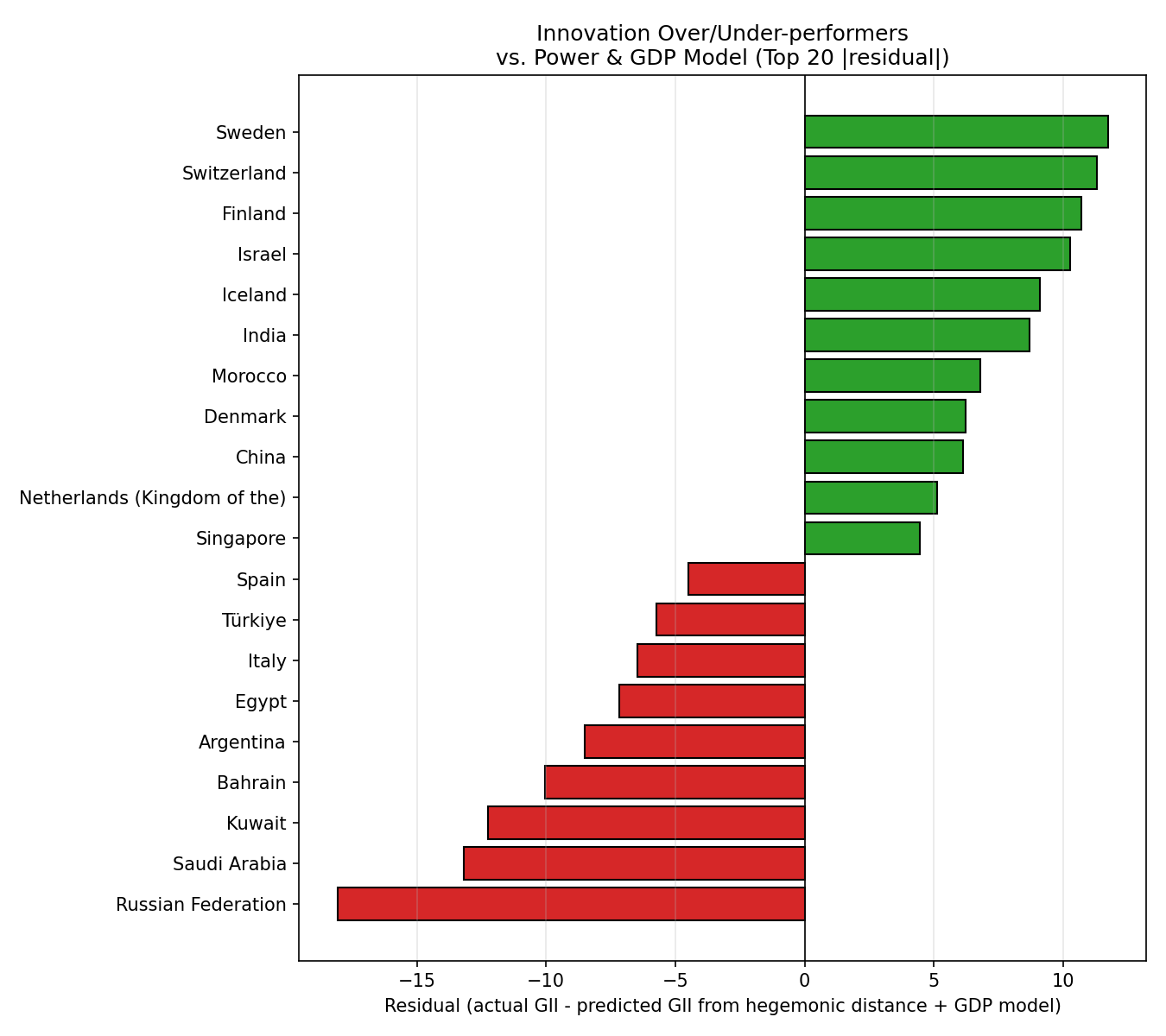
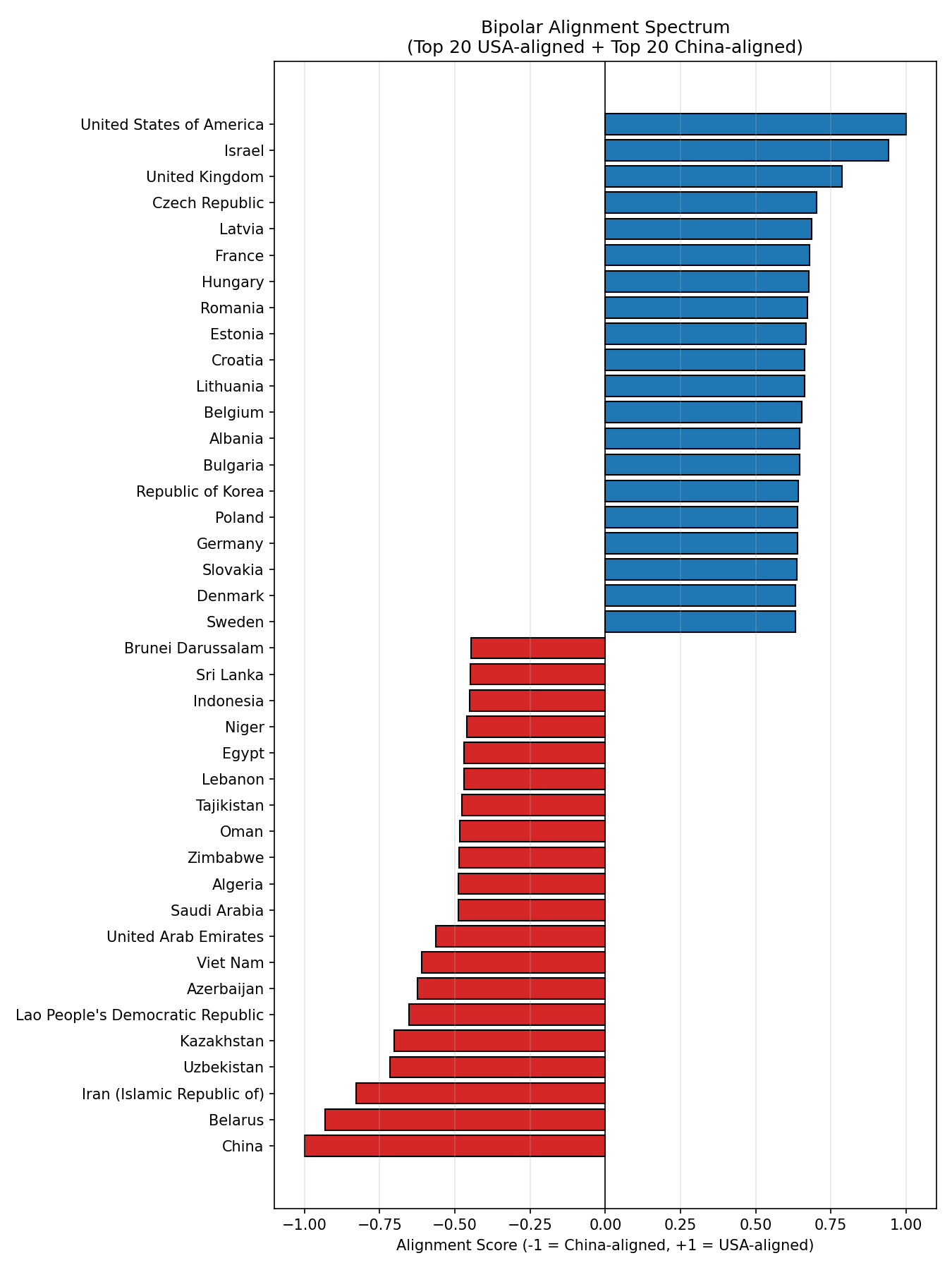
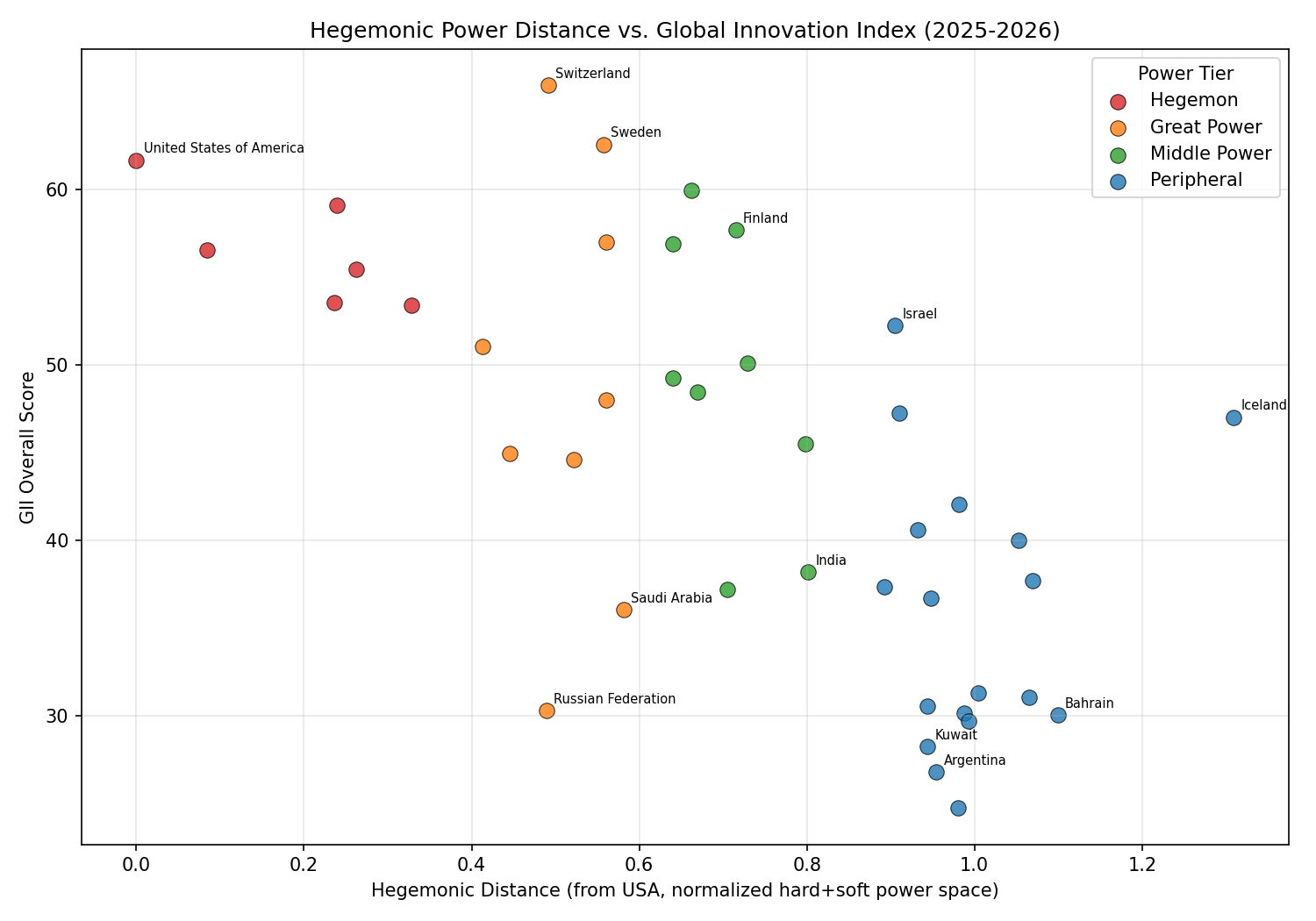
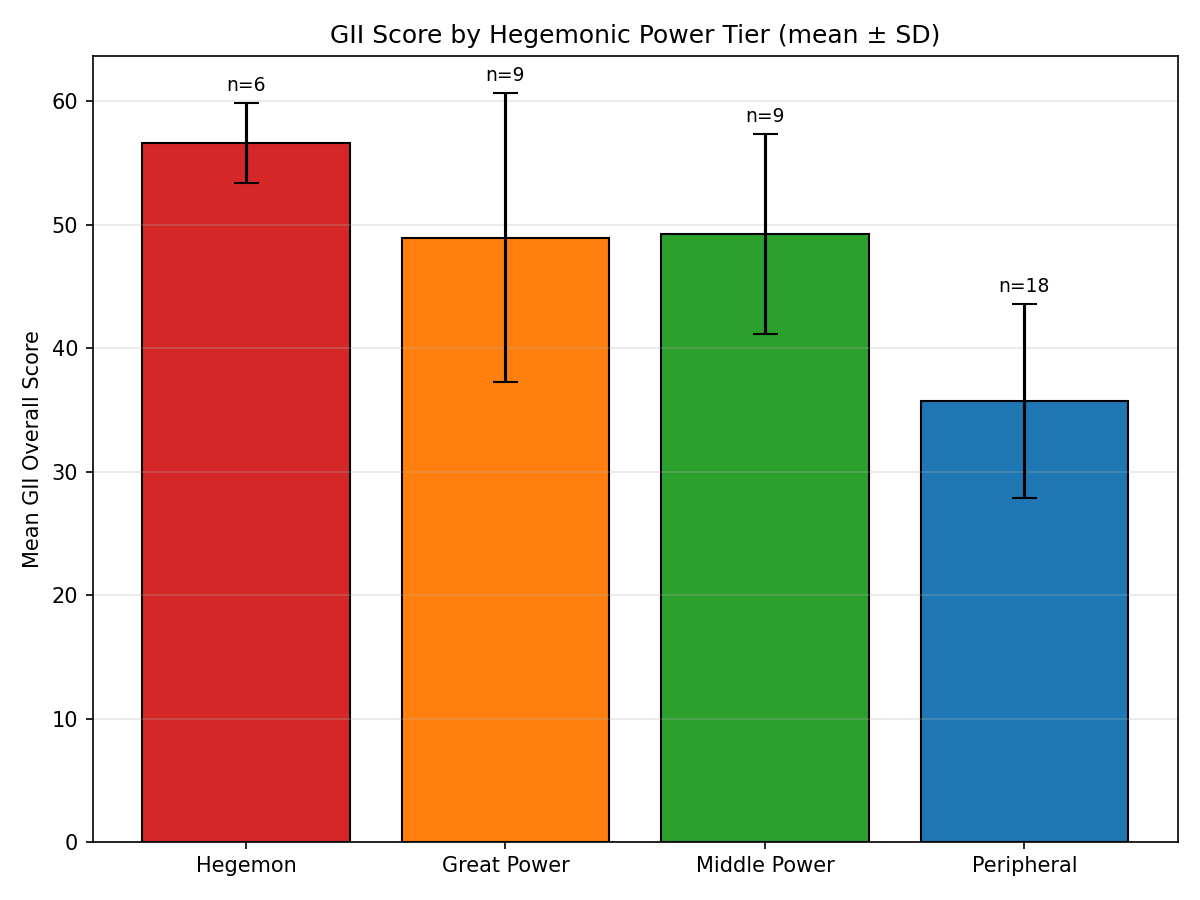
Hegemonic Power Distance vs. Global Innovation

Amid the shift toward a more multipolar international order, this project builds a quantitative framework to test how geopolitical power distance between blocs relates to national innovation output — combining clustering, correlation, and regression to examine bipolar alignment patterns (US/China) across countries, as a case study in applying data science methods to political-economy questions.
K-means
country clustering
Pearson /
Spearman
correlation analysis
Multi-var
regression model
Pythonscikit-learnSciPy PandasStatistical Modeling

Domain depth, not just framework familiarity.

Medical Imaging & Physics

  • BED / EQD2, TCP / NTCP modeling
  • DVH analysis, Monte Carlo dose calc
  • MONAI, 3D U-Net segmentation
  • Radiomics, MRI/CT/X-ray processing

ML / Deep Learning

  • PyTorch, Conditional GANs (pix2pix)
  • Attention U-Net, PatchGAN
  • CatBoost, scikit-learn
  • K-means, regression, correlation analysis

Agentic AI & LLM Orchestration

  • Multi-agent system design
  • Groq (Llama 3.3 70B), Ollama
  • Three-tier intent routing
  • Graceful degradation architecture

Data & Infrastructure

  • Python, SQL, Pandas / NumPy / SciPy
  • Docker, Kubernetes
  • Streamlit dashboards
  • Git, Linux environments

Building toward medtech roles in the Netherlands & Germany.

Open to freelance contracts, collaboration, and full-time opportunities in medical imaging AI.